
Sanctions policy
How Gulf Titans International screens counterparties, cargoes, vessels and payments against UAE, UN, US, EU and UK sanctions.
Document GTI-CMP-SAN-001 · Version 1.0 · Effective 11 October 2026 · Next review October 2027
Know your counterparty, know your cargo, know your vessel
This is the Sanctions Policy of Gulf Titans International Offshore Crude Oil Trading L.L.C. It is owned by the Compliance Team and is shared with banks and counterparties as part of their due diligence on the Company.
1. Purpose
This Policy sets out the principles, controls and procedures that Gulf Titans International Offshore Crude Oil Trading L.L.C (Gulf Titans International or the Company) applies to ensure that its trading in crude oil, refined petroleum products and related commodities complies with all applicable economic and trade sanctions.
Sanctions exposure in physical oil trading arises not only from who the Company deals with, but from where a cargo originates, which vessels carry it, how it is transferred, and how it is paid for. This Policy is designed to manage each of those risks and to give banks, national oil companies, refiners and other counterparties clear assurance of the Company's standards.
2. Scope and applicability
This Policy applies to:
- All directors, officers, managers and employees of the Company
- Shareholders when acting on behalf of the Company
- Agents, brokers, intermediaries, consultants and contractors acting for or on behalf of the Company
- All transactions, in any currency and in any jurisdiction, including purchases, sales, chartering, storage, ship to ship (STS) transfers, financing, insurance and payments
3. Policy statement
Compliance with this Policy is mandatory. Where this Policy is stricter than applicable law, this Policy prevails.
The Company has zero tolerance for sanctions violations. The Company will not, directly or indirectly:
- Deal with, or make funds or economic resources available to, any sanctioned person or entity
- Purchase, sell, transport, store, finance or broker any cargo of sanctioned origin or ownership
- Charter, nominate or accept any designated vessel, or any vessel engaged in deceptive shipping practices
- Engage in any arrangement intended to evade, avoid or circumvent sanctions, including through blending, re-labelling, falsified documents, third party payments or opaque ownership structures
- Facilitate any transaction by another party that the Company itself would be prohibited from undertaking
Doubtful transactions
Where there is doubt whether a transaction is permitted, the transaction must not proceed until the Compliance Officer has given written clearance.
4. Definitions
- Sanctions: economic, financial or trade restrictions imposed by the UAE, the UN Security Council, the United States, the European Union, the United Kingdom or any other authority relevant to a transaction, including asset freezes, trade embargoes, sectoral restrictions and price caps.
- Sanctioned Person: any individual, entity or vessel listed on a sanctions list, or owned 50% or more (individually or in aggregate) or controlled by one or more listed persons.
- Sanctioned Jurisdiction: a country or territory subject to comprehensive or significant sectoral sanctions, as set out in Annex A.
- Sanctioned Origin: crude oil, products or petrochemicals produced in, loaded from, or owned by a Sanctioned Jurisdiction or Sanctioned Person, including where blended, re-documented or transshipped.
- Designated Vessel: a vessel listed by any relevant authority, or owned, managed or operated by a Sanctioned Person.
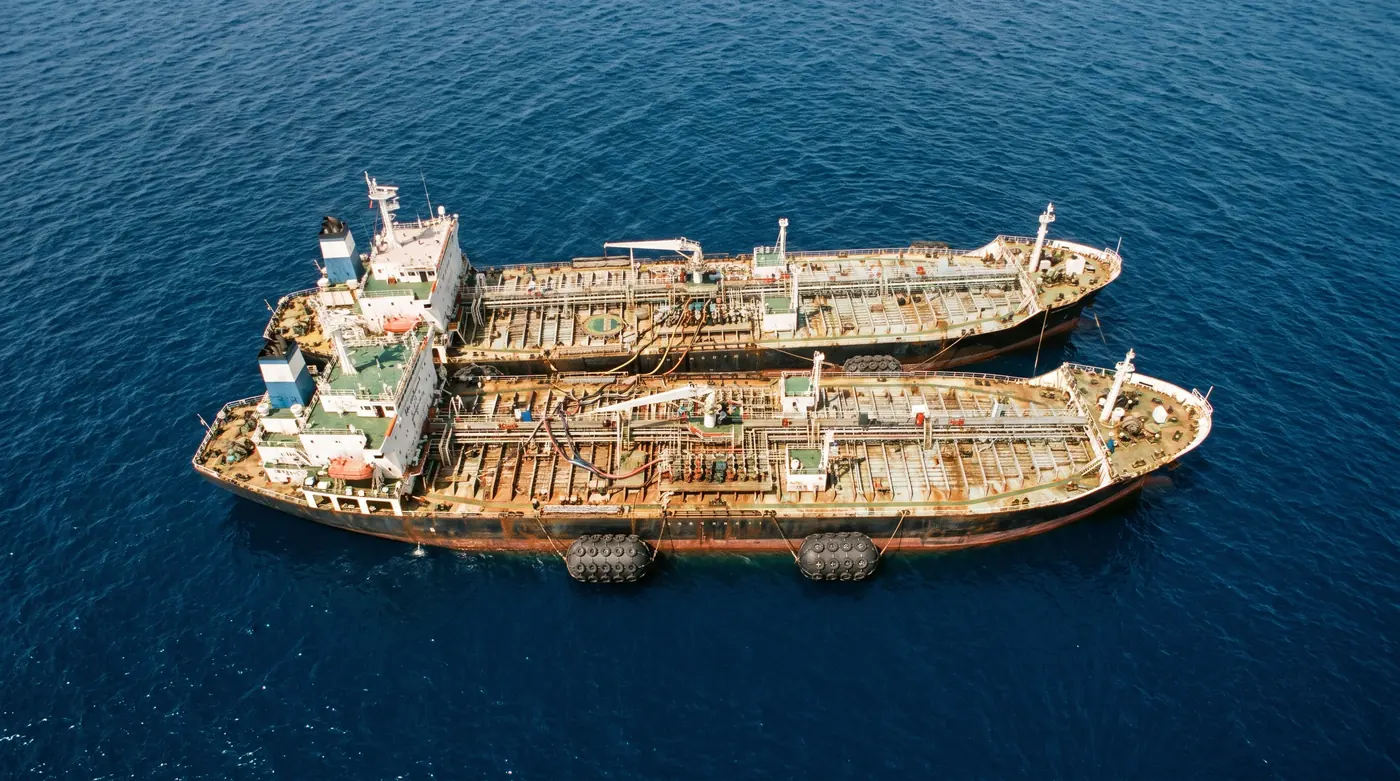
- Deceptive Shipping Practices: conduct used to disguise a vessel's identity, location or cargo, including AIS manipulation or disablement, spoofing, falsified documents, flag hopping and unreported STS transfers.
- UBO (Ultimate Beneficial Owner): any natural person who owns or controls, directly or indirectly, 25% or more of an entity, or who otherwise exercises effective control.
- Compliance Officer: the person appointed by management to oversee sanctions and AML compliance, including the MLRO function where combined.
5. Applicable sanctions regimes
The Company is incorporated in Dubai and is directly bound by UAE law. Because its trades are typically priced in US dollars, financed by international banks, insured in London and shipped through international waters, the Company also complies with the major international regimes as a matter of policy. The following regimes are applied to every transaction.
United Arab Emirates:
- Federal Decree-Law No. (10) of 2025 on Combating Money Laundering, Countering the Financing of Terrorism and Proliferation Financing, and its implementing regulations
- Cabinet Decision No. (74) of 2020 on the Terrorism Lists Regulation and the implementation of UN Security Council resolutions on terrorism and the proliferation of weapons of mass destruction (as amended or replaced)
- The UAE Local Terrorist List and directions issued by the Executive Office for Control and Non-Proliferation (EOCN)
International regimes
- United Nations: UN Security Council Consolidated List
- United States: OFAC Specially Designated Nationals (SDN) and Sectoral lists, and secondary sanctions programmes affecting non-US persons
- European Union: EU Consolidated Financial Sanctions List and EU restrictive measures, including on Russian-origin oil
- United Kingdom: UK Sanctions List (OFSI and OTSI)
- Any other regime that applies by reason of a counterparty, bank, insurer, flag state, port or currency involved in the transaction
Maintaining the list of regimes
The Compliance Team maintains the current list of regimes and sanctions lists screened, and updates Annex A whenever the regulatory position changes.
6. Roles and responsibilities
- Chairman and Managing Director: overall accountability for sanctions compliance; approves this Policy; final approval of any transaction escalated as high risk; ensures adequate compliance resources.
- Compliance Officer and MLRO: owns this Policy; operates screening; approves onboarding and high risk deals; investigates alerts; makes regulatory notifications; maintains records; delivers training; reports to management at least quarterly.
- Trading Desk: identifies counterparties, origin and logistics before negotiation; completes the pre-deal checklist; stops and escalates any red flag; never commits the Company before compliance clearance.
- Operations and Chartering: screens vessels, owners, managers, P&I and STS counterparts; reviews AIS history; verifies loading documents and the cargo chain.
- Finance: screens payment parties and banks; rejects third party or unexplained payments; aligns letter of credit and payment terms with this Policy.
- All personnel: comply with this Policy; report concerns promptly; never tip off a counterparty.
7. Risk-based approach
The Company applies a risk-based approach. Each counterparty and each transaction is rated Low, Medium or High risk based on:
- Jurisdiction of incorporation, ownership, operation and banking of the counterparty
- Declared origin, loading port and route of the cargo, including any STS transfers
- Vessel profile: flag, age, ownership, insurance and trading history
- Transaction structure: intermediaries, payment routing, currency and pricing relative to market
- Quality and consistency of the documents provided
High-risk approvals
High-risk counterparties and transactions require enhanced due diligence and written approval by the Compliance Officer and the Managing Director before any commitment is made.
8. Counterparty screening and due diligence
Know your counterparty. Before any offer, ICPO, contract or exchange of banking information, the Company must identify and verify the counterparty, including:
- Full legal name, registration number, registered address and jurisdiction
- Certificate of incorporation, trade licence, constitutional documents and register of directors
- Shareholding structure up to the UBO, with identity documents for each UBO
- Authorised signatories and evidence of authority
- Principal bank and account jurisdiction
- Nature of business and, for producers or refiners, evidence of the asset or allocation
Screening
All of the following must be screened against the sanctions lists in Section 5 using the Company's approved screening tool:
- The counterparty, its directors, UBOs and any parent entity
- Brokers, agents and intermediaries in the chain
- Banks: issuing, advising, confirming and receiving
- Vessels (by IMO number), registered owners, commercial managers, technical managers and operators
- Inspection companies, storage terminals and STS service providers where relevant
When screening takes place
Screening is performed at onboarding, before contract signature, before cargo loading or vessel nomination, before each payment, and on an ongoing basis whenever sanctions lists are updated.
The Company applies the 50% ownership rule on an aggregated basis and treats control by a Sanctioned Person as equivalent to ownership.
Enhanced due diligence
Enhanced due diligence is required for all High-risk relationships and includes, as a minimum: independent verification of ownership and source of product; adverse media checks; review of the counterparty's own sanctions compliance programme; a written sanctions warranty; and senior management approval. Relationships are reviewed at least every six months.
9. Cargo origin due diligence
The Company must be satisfied, on the basis of documentary evidence, that each cargo is not of Sanctioned Origin. For every cargo the Trading Desk and Operations must obtain and cross-check:
- Certificate of Origin issued by a competent authority or the producing national oil company
- Bills of lading, including the full chain of bills of lading, and the cargo manifest
- Certificate of Quantity and Certificate of Quality from an independent inspector (for example SGS, Saybolt or Intertek), consistent with the declared grade
- Loading port documents and terminal records
- Evidence of title transfer through each prior seller in the chain
- STS documentation, including the identity and location of each vessel involved
Grounds for rejection
Cargoes must be rejected or escalated where the assay is inconsistent with the declared grade; the origin, load port and voyage are inconsistent; documents show alterations or irregular issuers; the price is materially below market without commercial explanation; or the product has passed through STS transfers in known high-risk areas without full transparency.
Where a cargo is or may be subject to a price cap regime, it may only be handled with prior written approval of the Compliance Officer and the Managing Director, supported by the required attestations, itemised cost evidence, and confirmation that no Sanctioned Person, Designated Vessel or prohibited service provider is involved. Absent such approval, the transaction is prohibited.

10. Vessel and maritime screening
No vessel may be nominated, accepted or chartered until it has been screened and cleared. Vessel screening must cover, as a minimum:
- IMO number, name history, flag history and registered ownership for at least the last 24 months
- Commercial and technical managers, operators and ultimate owners
- P&I cover with an International Group club or an equivalent reputable insurer, and classification with an IACS member society
- AIS track history for at least the last 12 months, including gaps, spoofing indicators and port calls at Sanctioned Jurisdictions
- STS activity, especially in known high-risk transfer areas, and loitering patterns
- Vessel age and condition; vessels over 20 years old require compliance review
Vessel rejection
Any vessel with unexplained AIS gaps, recent flag changes, fraudulent or unknown registration, obscure ownership, or a history of calls at Sanctioned Jurisdictions must be rejected or escalated. Contracts must give the Company the right to reject vessels on sanctions grounds and must require continuous AIS transmission throughout the voyage.

11. Payment and financing controls
- Payments may only be made to or received from the contractual counterparty, through an account in its own name at a reputable bank in a non-sanctioned jurisdiction
- Third party payments, split payments and unexplained routing are prohibited
- The currency and bank chain must be screened; any bank in the chain that is a Sanctioned Person results in rejection
- Letters of credit, SBLCs and other instruments must be consistent with this Policy and must not contain terms that conflict with applicable sanctions
- Finance must stop any payment where screening produces an unresolved alert
12. Contractual protections
All purchase, sale, charter, storage and agency contracts must include, as appropriate:
- A sanctions compliance warranty from the counterparty, including warranties as to origin and ownership of the cargo
- A right to suspend or terminate, without liability, if performance would breach sanctions or expose the Company to sanctions risk
- Information and audit rights to verify origin, vessel history and title chain
- A sanctions clause in charter parties, for example the BIMCO Sanctions Clause or an equivalent
- Undertakings not to re-sell or deliver the cargo to a Sanctioned Person or Sanctioned Jurisdiction
13. Red flags
The following indicators must be escalated immediately to the Compliance Officer. A red flag does not necessarily mean a transaction is prohibited, but it must be resolved and documented before proceeding:
- Reluctance to disclose UBOs, origin, loading terminal or vessel identity
- Prices significantly below market, or unusually generous payment terms
- Newly incorporated sellers or brokers with no trading history offering large volumes
- Requests to change the origin description, load port or vessel name in documents
- Cargo described as a blend, or of an origin inconsistent with its assay
- Use of shell companies, nominee directors or banks in high-risk jurisdictions
- Vessels with AIS gaps, recent flag or name changes, or STS transfers in high-risk areas
- Requests for payment to a third party, or in a currency or route without commercial rationale
- Pressure to bypass compliance checks or to commit before KYC is complete
14. Escalation, potential matches and reporting
Potential matches. Any potential match from screening must be reviewed by the Compliance Officer before the transaction proceeds. False positives must be cleared and documented with the reasons. Confirmed or unresolved matches result in the transaction being stopped.
Freezing and notification. Where the Company holds or controls funds or economic resources of a person listed under UAE or UN sanctions, it must freeze them without delay and without prior notice, and notify the EOCN and the relevant supervisory authority through the prescribed channels and within the timeframes required by law. Suspicious transactions must be reported to the UAE Financial Intelligence Unit through goAML.
No tipping off. No person may inform a counterparty or any third party that a transaction is under review, has been reported, or has been frozen, except as permitted by law.
Internal reporting. Any employee who suspects a breach of this Policy must report it promptly to the Compliance Officer or management. The whistleblowing protections in the Company's Code of Conduct apply.
15. Record keeping
The Company keeps complete records of all due diligence, screening results, alert reviews, approvals, transaction documents and regulatory reports for at least five years from the end of the relationship or completion of the transaction, or longer where required by law. Records must be available promptly to regulators, auditors and banks on request.
16. Training and awareness
All personnel covered by this Policy receive sanctions training on joining and at least annually thereafter. Trading, operations, chartering and finance staff receive additional role-specific training on origin verification, vessel screening and deceptive shipping practices. Attendance is recorded.
17. Monitoring, testing and audit
The Compliance Officer monitors the effectiveness of this Policy through periodic file reviews, screening system testing and post-trade reviews. The sanctions programme is subject to independent review at least once every two years. Findings and remediation are reported to the Managing Director.
18. Breaches and disciplinary action
Breaches of this Policy are serious misconduct and may result in disciplinary action up to and including termination of employment or contract, as well as referral to the competent authorities. Sanctions breaches may also expose individuals to personal criminal and civil liability.
19. Review and updates
This Policy is reviewed at least annually, and immediately following any material change in applicable sanctions, the Company's business model or its risk profile. Annex A may be updated by the Compliance Officer between formal reviews.
Annex A: Restricted jurisdictions and product treatment
This Annex reflects the Company's risk appetite, which may be stricter than the legal minimum. It is maintained by the Compliance Team and must be checked before every transaction, as sanctions positions change frequently.
| Category | Scope | Company treatment |
|---|---|---|
| Prohibited | North Korea; Iranian-origin crude oil, products and petrochemicals; occupied regions of Ukraine (including Crimea, Donetsk, Luhansk, Zaporizhzhia and Kherson); any Sanctioned Person or Designated Vessel | No business under any circumstances. |
| Restricted | Russian-origin crude oil and products; Venezuelan-origin crude oil and products; counterparties with Russian or Venezuelan state ownership | Prohibited unless a written legal opinion confirms the trade is permissible and the Compliance Officer and Managing Director approve in writing. |
| Enhanced review | Syria, Cuba, Belarus, Myanmar and other jurisdictions subject to targeted sanctions; cargoes involving STS transfers in high-risk areas; origins frequently used for re-labelling | Enhanced due diligence and Compliance Officer approval required. |
| Standard | All other jurisdictions | Standard due diligence and screening under Section 8. |
Position as at the effective date of this Policy. The Compliance Team updates this Annex as sanctions regimes change.
Approval
This Policy is approved by the management of Gulf Titans International Offshore Crude Oil Trading L.L.C and is effective from 11 October 2026. Banks and counterparties may request the signed copy as part of their due diligence.